An EICR (Electrical Installation Condition Report) assesses the safety of your electrical installation. Essential for landlords (legally required), recommended for homeowners, and necessary for businesses. Our thorough inspections identify potential hazards and ensure compliance with current regulations.
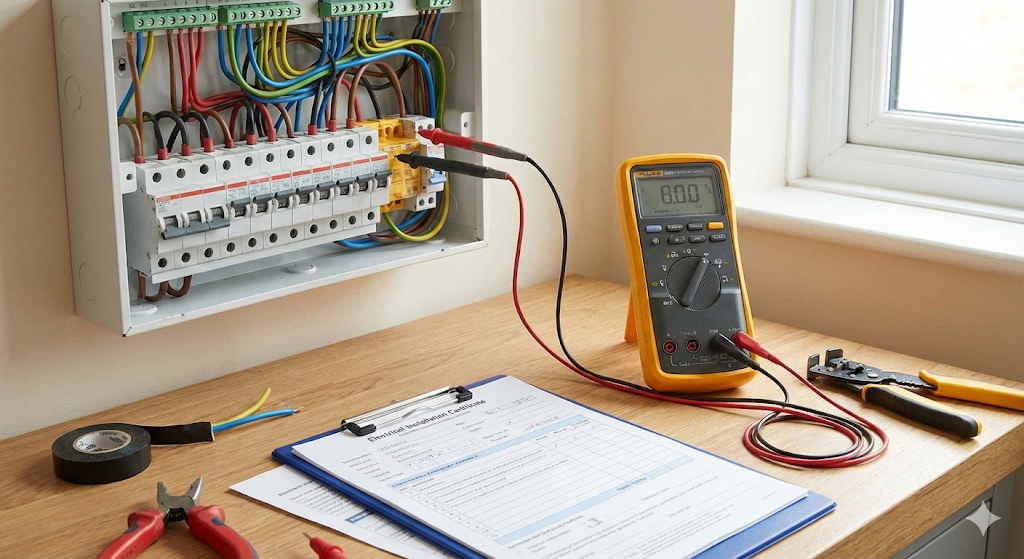
An Electrical Installation Condition Report (EICR) is a formal assessment of the fixed wiring and electrics in a property, carried out against the current edition of BS 7671 (the IET Wiring Regulations). The inspection checks your consumer unit, circuits, sockets, switches, light fittings, earthing and bonding for damage, wear, overloading and dangerous DIY work, combining a visual survey with electrical testing to reveal faults you cannot see. The result is a clear, certificated report on whether the installation is satisfactory or unsatisfactory, with every issue clearly listed.
Landlords in England are legally required to have a valid EICR every five years, and at each change of tenancy — something that matters across Haverhill and the wider Suffolk area, where a good deal of older rented housing stock can hide tired or outdated wiring. Homeowners aren't legally obliged, but an EICR every ten years is sensible for safety, and is well worth having when buying, selling or after major renovation. Businesses need them to meet their duty of care to staff and the public.
Faults are graded with simple codes: C1 means danger present and immediate action is required; C2 means potentially dangerous and remedial work is needed; C3 means improvement recommended but not urgent; and FI means further investigation is required. A report is only satisfactory once any C1 and C2 issues are resolved. As a NAPIT-registered electrician, HC Electrical can issue legally valid EICR certificates and, crucially, self-certify any remedial work under Part P of the Building Regulations — so you get the inspection, the fixes and the compliant paperwork from one trusted source.
The cost of an EICR depends on the size of your property and the number of circuits in the consumer unit — a small flat is quicker to test than a large house with multiple boards. Other factors include the age and condition of the installation and how easy the wiring is to access. Rather than quote a one-size-fits-all figure, we look at your specific property and give you a free, no-obligation quote with a clear breakdown before any work begins. There are no hidden charges, and if remedial work is needed afterwards we will price that separately and transparently so you can decide how to proceed.
Landlords in England must have a valid EICR carried out at least every five years, and at the start of each new tenancy if the existing report has expired. A copy must be given to tenants and, if requested, to the local authority. This is a legal requirement under the Electrical Safety Standards in the Private Rented Sector Regulations, and the penalty for non-compliance can reach up to £30,000 — a regulatory fine, not a cost of testing. As a NAPIT-registered electrician, HC Electrical can carry out the inspection, issue the legally valid certificate and self-certify any remedial work needed to bring the property up to standard.
If an installation is classed as unsatisfactory it means one or more C1 (danger present) or C2 (potentially dangerous) faults have been found. There is no need to panic — we will talk you through exactly what was found and what it means in plain terms. In many cases minor remedial work can be carried out there and then; for larger jobs we provide a clear, no-obligation quote. Because we are NAPIT-registered, we can complete the repairs and self-certify the work under Part P, then issue a satisfactory report once all C1 and C2 issues are properly resolved, so everything is compliant and documented.
A typical domestic EICR takes around two to four hours, though this varies with the size of the property and the number of circuits being tested. Larger homes, commercial premises or installations with many circuits naturally take longer. During testing the power needs to be turned off in stages, so you will experience brief interruptions to your electricity supply, but we plan the work to keep disruption to a minimum and let you know what to expect beforehand. Once the inspection is complete we explain the findings and provide your certificated report, along with advice on any work that may be recommended.
Homeowners are not legally required to have an EICR, but one is strongly recommended at least every ten years for safety and peace of mind. An inspection is especially worthwhile when buying a property — so you know exactly what you are taking on — or after major renovations, an extension, or if the wiring is showing its age. This is particularly relevant with the older housing common across Haverhill and Suffolk, where original or part-updated wiring can hide problems. As a NAPIT-registered electrician, HC Electrical can carry out the inspection and certify any work needed under Part P.
Modern consumer unit upgrades, fuse board replacements, and electrical panel repairs for improved safety.
Complete house rewiring, partial rewires, and new wiring installation for extensions and renovations.
Fast emergency electrical repairs and power restoration when you need help urgently.
Every electrical inspections (eicr) job is carried out by Harry Crane, HC Electrical's NAPIT-registered electrician. See his credentials and how a job runs from quote to completion.
We provide electrical inspections (eicr) for homes and businesses throughout Haverhill and the surrounding towns: